
How Seasonal Shifts Affect Your Body and Why Holi Foods Help
Introduction
As winter fades and summer approaches, our bodies undergo significant physiological changes. From digestion to metabolism and energy levels, the transition between seasons can impact how we feel, perform, and even crave food. Interestingly, traditional Holi foods like gujiya, thandai, and dahi vada have been part of Indian culture for centuries—not just for taste but because they help our bodies adapt to these changes.
But how does the shift from winter to summer affect different age groups, genders, and regions? And why should you not stop eating these festive foods? Let’s break it down.
How the Winter-to-Summer Transition Affects the Body
1. Changes in Digestion
- During winter, the body’s digestive fire (Agni)is strong, allowing us to digest heavier foods. As temperatures rise in early summer, digestion slows down, making us more prone to bloating, acidity, and indigestion.
- This is why fermented foods likedahi vada are commonly eaten during Holi—they introduce probiotics that improve gut health.
2. Metabolism Fluctuations
- In colder months, the body burns more calories to maintain warmth, leading to a higher appetite and metabolism. As temperatures rise, metabolism slows, and the body requires more cooling foods.
- Traditional Holi drinks like Thandai(made with fennel, rose, almonds, and poppy seeds) help cool down the system and regulate metabolism.
3. Energy Levels & Mood Swings
- The seasonal shift often leads to fatigue, sluggishness, and mood swingsas the body adjusts to new daylight hours and hormonal shifts.
- Holi sweets like gujiyaprovide a quick energy boost with natural sugars and healthy fats that help sustain energy without crashing.
Impact on Different Age Groups
1. Children (5-15 years)
- Kids have high energy demands but weaker digestive systems.
- Sudden heat can cause dehydration and digestion issues, making thandai and dahi vada ideal choices to keep them hydrated and improve gut health.
- For teenagers experiencing growth spurts, dry fruits in gujiya provide essential nutrients like iron, zinc, and omega-3 fatty acids.
Tip: Instead of avoiding sweets, teach children to eat homemade, less processed versions of Holi snacks.
2. Adults (16-50 years) – Men & Women
- Men
- Many men experience fatigue and sluggishness during seasonal transitions.
- The protein and nuts in gujiya provide long-lasting energy, while fennel in thandai improves digestion and stamina.
- Women
- The shift from winter to summer can cause hormonal imbalances, bloating, and skin issues.
- Cooling spices in Holi drinks help regulate body temperature and improve metabolism.
- Urban Adults vs. Rural Adults
- Urban adults with sedentary lifestyles may gain weight during this transition. Instead of avoiding festive foods, they should focus on portion control.
- Rural adults who engage in physical labor require higher energy foods. Their bodies naturally burn off extra calories, making Holi sweets beneficial.
Tip: Pair Holi treats with high-fiber foods like fruits and vegetables to balance blood sugar.
3.Senior Citizens (50+ years)
- Digestion weakens with age, making seniors more prone to acidity and bloating.
- Curd-based foods like dahi vada help improve gut health and immunity.
- Dry fruits in gujiya provide brain-boosting nutrients for memory and cognitive function.
Men vs. Women
- Men over 50 often struggle with heart health, so opting for baked gujiya with less sugar can be a better choice.
- Post-menopausal women may experience weaker bones, making calcium-rich thandai with almonds and seeds a great option.
Tip: Hydrate well and pair festive treats with herbal teas to ease digestion.
Regional Variations: Why Different Locations Eat Different Holi Foods
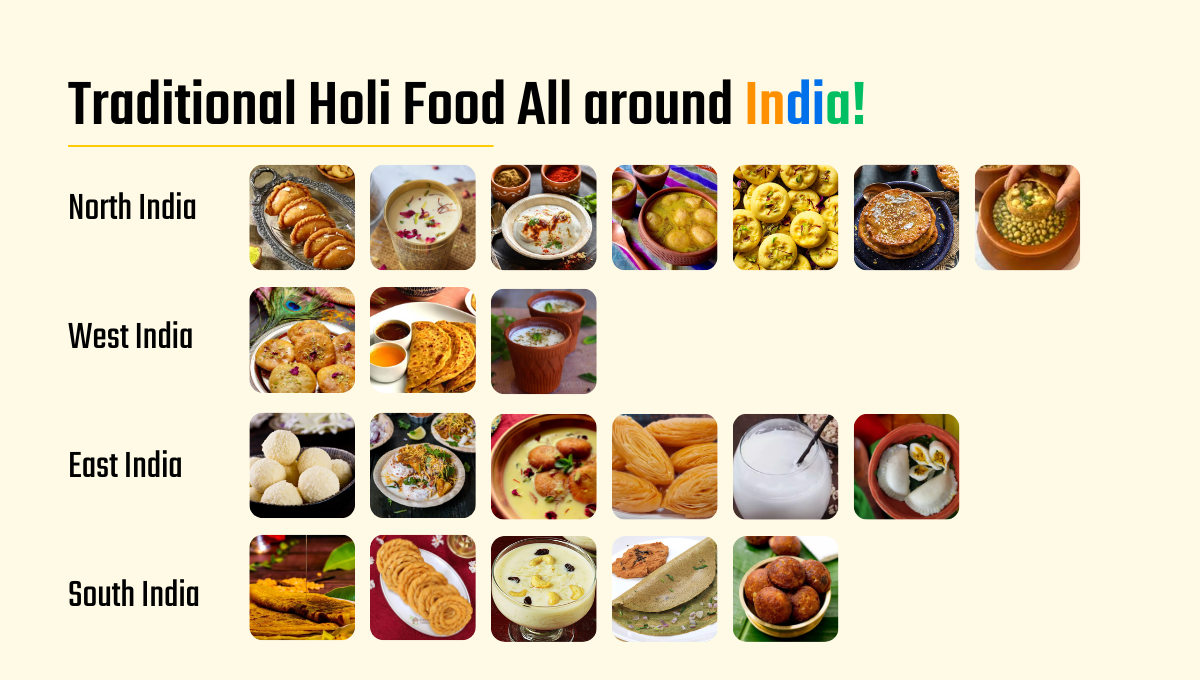
- North India (Punjab, Delhi, UP, Rajasthan)
- Extreme temperature changes require high-energy Holi foods like gujiya and malpua.
- Spiced thandai cools the body and prevents heat strokes.
- South India (Tamil Nadu, Kerala, Karnataka, Andhra Pradesh)
- A warmer climate year-round means Holi snacks include lighter sweets and coconut-based dishes for easy digestion.
- Buttermilk (chaas) is often preferred over dahi vada for cooling.
- West India (Maharashtra, Gujarat, Goa)
- Puran Poli & Shrikhand provide essential carbohydrates and probiotics.
- Use of jaggery instead of sugar makes sweets healthier.
- East India (Bihar, West Bengal, Odisha, Assam)
- Pitha and Payesh (rice-based sweets) provide sustained energy and are easy to digest.
- More focus on fermented foods to maintain gut health during the transition.
The Ayurvedic Science Behind Holi Foods: Why You Should Not Stop Eating Them
Holi is not just about colors—it is deeply connected to Ayurveda and the science of Ritucharya (seasonal changes). The foods we eat during Holi, such as thandai, gujiya, and dahi vada, are not just festive treats; they help our bodies transition from winter (Shishir Ritu) to summer (Grishma Ritu).
Why Does Ayurveda Recommend Specific Foods for Holi?
According to Ayurveda, as the seasons change:
✔ Digestion weakens – The body struggles to process heavy foods.
✔ Heat increases – The body starts accumulating heat, making cooling foods essential.
✔ Immunity fluctuates – The body needs natural herbs and spices to fight infections.
Holi foods balance these seasonal shifts using ancient Ayurvedic principles. Let’s break it down with facts, data, and expert insights
Ayurvedic Principles Behind Holi Foods
1. Why Thandai is an Ayurvedic Superdrink
- Ayurvedic Principle: Pitta-pacifying, improves digestion, cooling effect on the body.ora, aid digestion, and prevent seasonal diseases.” – Bhavaprakasha Nighantu
| Ingredients | Ayurvedic Benefit |
|---|---|
| Fennel Seeds (Saunf) | Cools the body, improves digestion, and prevents acidity. |
| Rose Petals | Cools the body, improves digestion, and prevents acidity |
| Almonds | Strengthens the nervous system, provides healthy fats. |
| Poppy Seeds (Khus-Khus) | Relaxes the nervous system, aids better sleep. |
| Cardamom (Elaichi) | Reduces bloating, enhances metabolism. |
- Scientific Backing:
-
- A study published in the Journal of Ayurveda and Integrative Medicine found that fennel seeds reduce body heat by up to 50% and improve digestion (Source: NCBI).
- Rose petals have been traditionally used for cooling properties, with modern research confirming their anti-inflammatory effects (Source: PubMed).
Quote from Ayurveda:
“Fennel, when taken in the summer months, pacifies the Pitta dosha and prevents the accumulation of excessive heat in the body.” – Charaka Samhita
2. Why Gujiya is More Than Just a Sweet
-
- Ayurvedic Principle: Vata-balancing, provides energy, supports seasonal immunity.
- Nutritional Facts (Per 1 Gujiya – 50g)
- Calories: 200-250 kcal
- Protein: 4-6g
- Healthy Fats: 8-10g
- Carbohydrates: 25-30g
- Ayurvedic Principle: Vata-balancing, provides energy, supports seasonal immunity.
-
- Why Ayurveda Supports Gujiya?
- Ghee in Gujiya: Increases Ojas (vital energy), improves digestion.
- Jaggery over Sugar: Provides slow-release energy, balances Kapha dosha.
- Nuts (Almonds, Cashews, Raisins): Enhance brain function, prevent weakness during seasonal shifts.
- Why Ayurveda Supports Gujiya?
-
- Scientific Backing:
- A study in Food Research International showed that ghee improves gut bacteria, which supports digestion and immunity (Source: ScienceDirect).
- Research suggests that almonds help reduce oxidative stress and inflammation, which are common during season changes (Source: PubMed).
- Scientific Backing:
Quote from Ayurveda:
“Ghee consumed in moderate amounts lubricates the digestive tract, sharpens memory, and promotes longevity.” – Sushruta Samhita
3. Dahi Vada: A Probiotic Powerhouse for the Gut
-
- Ayurvedic Principle: Balances Pitta & Kapha dosha, improves gut health, boosts immunity.
| Ingredients | Ayurvedic Benefit |
|---|---|
| Curd (Dahi) | Natural probiotic, enhances digestion, supports gut microbiome. |
| Hing (Asafoetida) | Reduces bloating, improves absorption of nutrients. |
| Black Salt | Reduces bloating, improves absorption of nutrients. |
| Coriander & Mint | Detoxifies the body, improves metabolism. |
2. Scientific Backing:
-
- Probiotic-rich foods like curd improve gut microbiota and reduce seasonal allergies (Source: NCBI).
- Studies show that black salt contains essential minerals that balance electrolytes and prevent dehydration in warmer months (Source: ScienceDirect).
Quote from Ayurveda:
“Fermented foods balance gut flora, aid digestion, and prevent seasonal diseases.” – Bhavaprakasha Nighantu
Season Shift Diet & Workout Plan for All Ages
Ayurveda and modern nutrition science both emphasize eating seasonal foods and adapting exercise routines to match the body’s changing needs. Below is a customized Season Shift Diet & Workout Plan for all age groups—so you can stay fit, energetic, and healthy during Holi and beyond.
Diet Plan for Seasonal Transition (Winter to Summer)
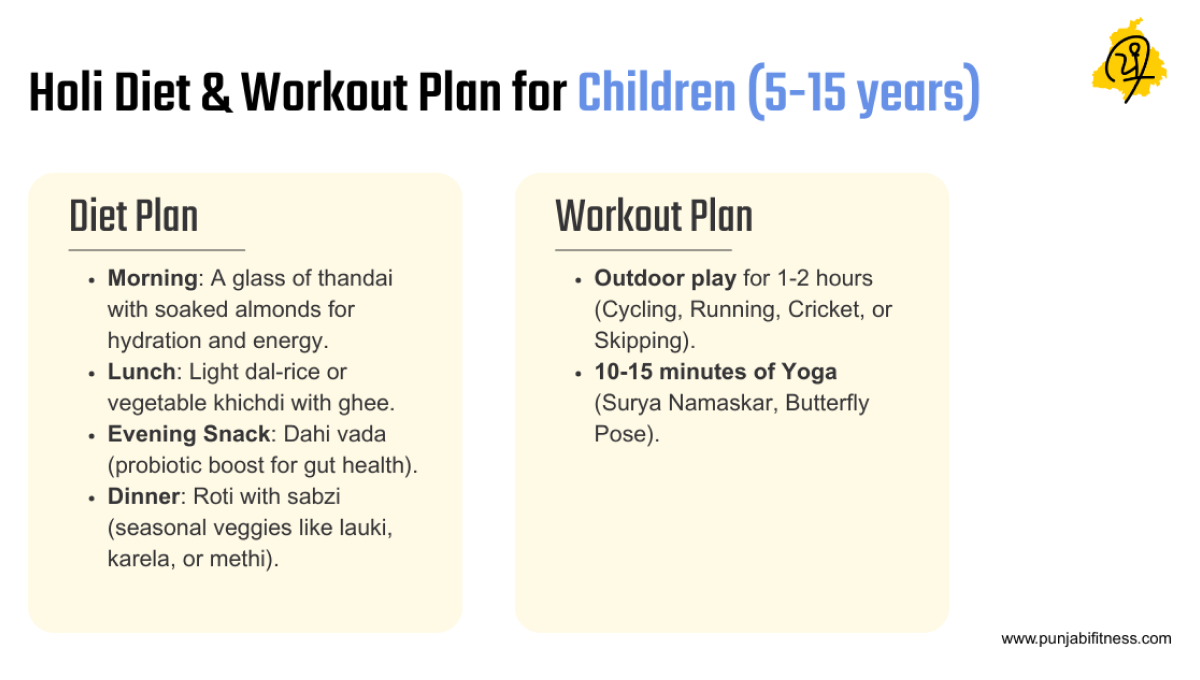
- Children (5-15 years)
-
- Challenges: Low hydration, weak digestion, energy fluctuations.
- Goal: Strengthen digestion, improve hydration, and maintain steady energy.
Want a science-backed seasonal diet plan for kids? Get the ₹199 Plan Now →
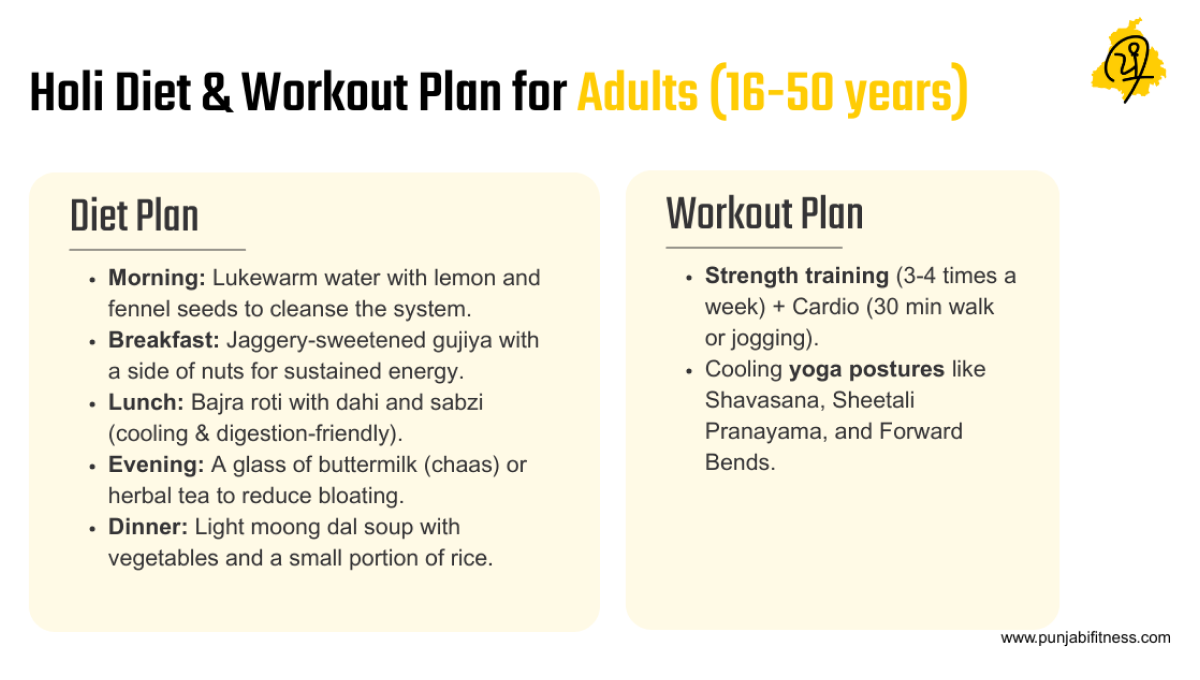
2. Adults (16-50 years) – Men & Women
- Challenges: Fatigue, sluggishness, bloating, reduced stamina.
- Goal: Support metabolism, improve digestion, and balance energy levels.

Need a customized diet plan for Holi? Join 1:1 Coaching Today →
3. Senior Citizens (50+ years)
- Challenges: Weak digestion, joint pain, reduced immunity.
- Goal: Improve digestion, maintain joint health, and strengthen immunity.
Key Nutrients to Focus On During Seasonal Change
| Nutrient | Why It’s Important | Found In |
|---|---|---|
| Probiotics | Improves digestion | Dahi vada, buttermilk |
| Healthy Fats | Supports metabolism | Ghee, almonds, seeds |
| Cooling Herbs | Reduces body heat | Fennel, rose petals |
| Electrolytes | Prevents dehydration | Coconut water, chaas, thandai |
| Iron & Zinc | Supports immunity | Dry fruits, jaggery, seeds |
Why You Shouldn’t Stop Eating Holi Foods
Myth: Holi foods are unhealthy.
Truth: When made traditionally, they support seasonal changes & digestion.
- Thandai → Cools the body, improves gut health.
- Gujiya → Provides energy, improves brain function.
- Dahi Vada → Strengthens immunity, aids digestion.
Conclusion
Seasonal shifts can make you feel tired, bloated, or sluggish, but the right diet and workout routine can help you stay healthy and active. Instead of avoiding traditional Holi foods, embrace them the right way with mindful eating and movement.
- Join the ₹199 Holi Fit Plan – Get a structured diet plan with seasonal nutrition tips.
- Book a 1:1 Coaching Session – Personalized fitness & diet guidance.
 1 : 1 Coaching
 © 2026 Punjabi Fitness. All Rights Reserved.